
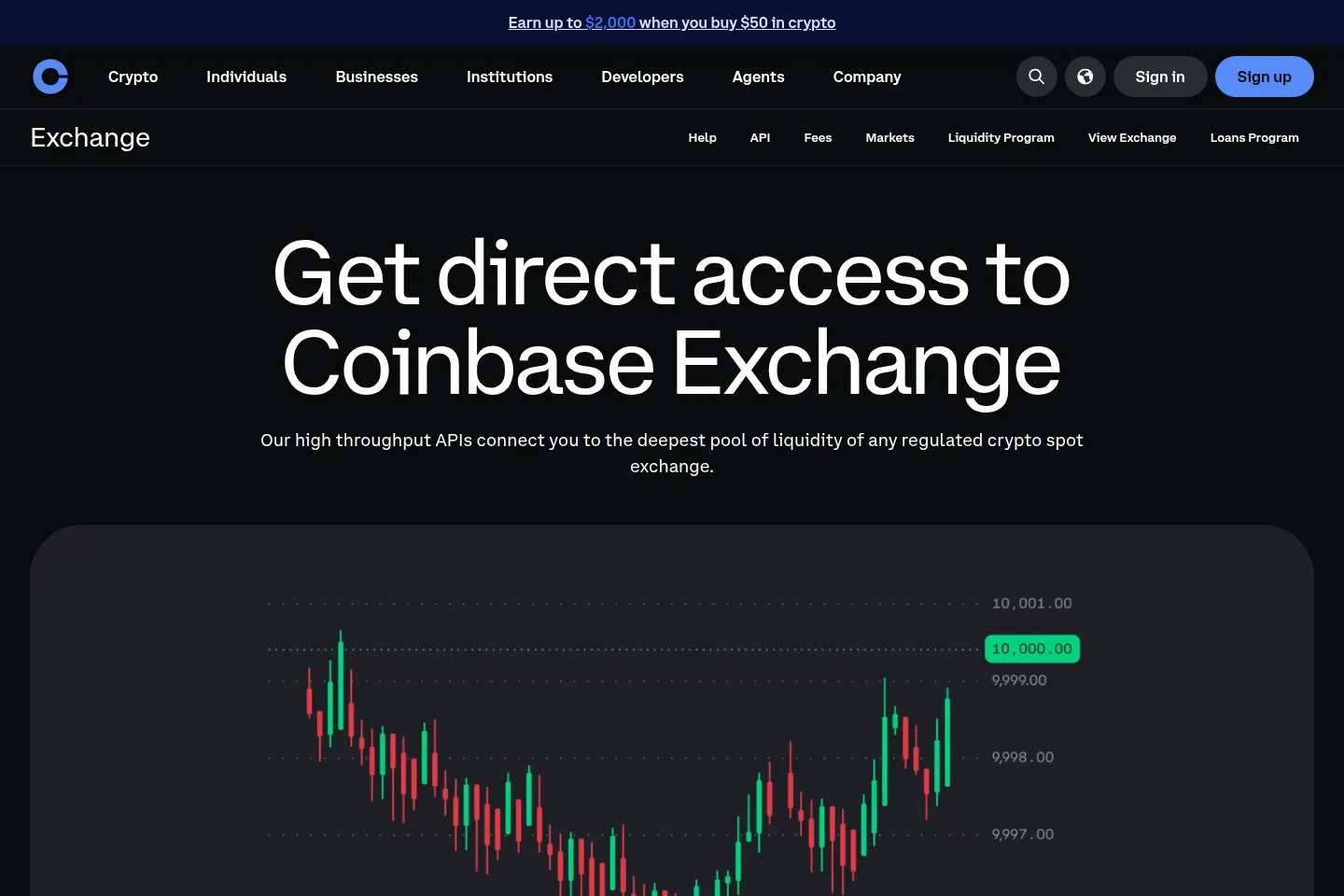
Coinbase is one of the most influential cryptocurrency companies in the world. Founded in 2012 and publicly listed on Nasdaq since 2021, the company has developed from a Bitcoin brokerage into a financial ecosystem spanning cryptocurrency trading, derivatives, traditional equities, institutional custody, stablecoin payments and blockchain infrastructure.
Its biggest strengths include extensive regulatory coverage, integration with traditional financial markets, straightforward fiat deposits and access to professional trading services. Coinbase also holds a particularly prominent position in institutional cryptocurrency custody.
However, the company’s reputation is more complicated than its branding suggests.
In 2025, criminals bribed overseas customer-support personnel and obtained sensitive customer information. Coinbase described the affected scope as less than 1% of its monthly transacting users. Coinbase refused a $20 million extortion demand and committed to reimbursing customers who lost money through related social-engineering attacks. Its financial disclosures show $311.2 million in cash expenditures related to the incident during 2025.
The exchange has also faced enforcement actions in the United States, the United Kingdom and the European Union. In November 2025, Ireland’s central bank imposed a €21.46 million penalty for anti-money-laundering monitoring failures. In October 2026, a separate Coinbase entity accepted another €3.25 million sanction concerning customer-fund safeguarding and outsourcing.
Meanwhile, the platform itself has changed significantly. Coinbase acquired Deribit in August 2025, integrated its international derivatives operations in October 2026 and introduced new Coinbase Advanced trading fees. Its broader strategy, called the Everything Exchange, combines cryptocurrency with equities, options, prediction markets and other financial products.
This review examines Coinbase’s real capabilities, pricing, regulation, financial transparency, security history and major controversies as of November 23, 2026.
Scope of this review: This article covers the wider Coinbase group because the supplied brief includes retail, institutional, securities, derivatives and self-custody services. Coinbase Exchange is the institutional spot venue; Coinbase Advanced is the retail order-book interface. Their fees, onboarding and protections are compared separately below.
1. Coinbase at a Glance
| Category | Details |
|---|---|
| Company | Coinbase Global, Inc. |
| Founded | 2012 |
| Founders | Brian Armstrong and Fred Ehrsam |
| CEO | Brian Armstrong |
| Public listing | Nasdaq: COIN |
| Headquarters | Remote-first US company |
| Main business | Cryptocurrency exchange and financial infrastructure |
| Trading interfaces | Coinbase, Coinbase Advanced, Coinbase Exchange |
| Coinbase Pro | Relaunch announced for Q4 2026 |
| EU MiCA entity | Coinbase Luxembourg S.A. |
| US regulation | FinCEN, state licenses, NYDFS, CFTC/NFA and SEC/FINRA through relevant entities |
| UK regulation | FCA-regulated and registered activities |
| Traditional spot markets | BTC, ETH, SOL, XRP and numerous altcoins |
| EEA Advanced spot fees | From 0.25% maker / 0.50% taker |
| US Advanced spot fees | From 0.50% maker / 0.90% taker |
| Institutional Coinbase Exchange fees | From 0.40% maker / 0.60% taker |
| Derivatives | Futures, perpetuals and options for eligible customers |
| Derivatives infrastructure | Coinbase Derivatives and Deribit by Coinbase |
| Stocks and ETFs | Available through separately regulated brokerage services |
| Prediction markets | Available to eligible US customers |
| Staking | Supported in selected jurisdictions |
| Premium subscription | Coinbase One |
| Self-custody products | Base App and integrated DEX wallets |
| Fiat funding | SEPA, ACH, wires, cards and selected local payment methods |
| Proof of Reserves | No comprehensive exchange-wide customer-verifiable Merkle-tree PoR |
| KYC | Mandatory for custodial exchange accounts |
| Institutional services | Coinbase Prime, Exchange, Custody, financing, OTC and APIs |
The main qualification is that Coinbase is a group of regulated businesses, not a single exchange operating under one universal license or fee schedule.
Sources: Coinbase board of directors, Coinbase Advanced regional fee update, September 2026, Coinbase Exchange institutional fee schedule.
2. Background, Founders and Ownership
Coinbase was founded in 2012 by Brian Armstrong and Fred Ehrsam. Its annual filing dates the original Coinbase, Inc. incorporation to May 2012.
Armstrong previously worked as a software engineer at Airbnb, while Ehrsam had experience trading foreign exchange at Goldman Sachs.
The company originally focused on simplifying Bitcoin purchases for consumers who did not want to navigate early cryptocurrency exchanges or manage complicated trading systems.
Over the following years, Coinbase expanded into exchange infrastructure, cryptocurrency custody, stablecoins and institutional trading.
Coinbase’s Nasdaq listing
On April 14, 2021, Coinbase became publicly traded through a direct listing on Nasdaq under the ticker COIN.
The listing was a major development for the cryptocurrency industry because it brought a large crypto-focused company into the public equity market.
As a publicly traded US company, Coinbase files annual and quarterly financial statements with the Securities and Exchange Commission.
These reports provide information about revenue, profitability, financial obligations, risk factors and material cybersecurity incidents.
Public-company reporting is a meaningful transparency advantage, although it does not guarantee the solvency of every subsidiary or eliminate operational risks.
Who controls Coinbase?
Coinbase remains led by co-founder Brian Armstrong, who serves as CEO and chairman.
Fred Ehrsam remains associated with the company as a co-founder and board director, while also working in cryptocurrency investment and other ventures.
Coinbase uses a dual-class share structure, under which certain shares carry enhanced voting rights.
Consequently, economic ownership and voting control are not distributed identically across all shareholders.
Source: Coinbase corporate governance
Sources: Coinbase 2025 Form 10-K, SEC filing.
3. Coinbase’s Business Model
Coinbase has several distinct revenue streams.
Its original business relies on collecting fees from customers who buy, sell and trade cryptocurrency.
However, the company increasingly generates revenue through subscriptions, custody, stablecoin-related services, institutional products and financial infrastructure.
Transaction revenue
Trading fees depend on volume, market conditions, trading products and customer activity.
Retail transactions can generate higher percentage fees than institutional orders.
Consequently, strong cryptocurrency market activity can increase transaction revenue, while periods of reduced trading interest can weaken it.
Subscription and services revenue
Coinbase receives revenue from Coinbase One memberships, custody services, staking-related products and stablecoin arrangements.
USDC plays an important role in this model.
Coinbase participates economically in the USDC ecosystem through commercial arrangements involving the stablecoin’s issuer, Circle.
Institutional infrastructure
Coinbase provides trading, settlement, financing and custody services to institutional clients.
The company also operates technology infrastructure that other businesses use to build cryptocurrency products.
Financial position in 2026
Coinbase reported net income of approximately $719 million for the third quarter of 2026.
Its quarterly report also cited a 10.7% crypto trading-volume market share under the company’s defined methodology.
Average USDC balances held in Coinbase products reached approximately $22 billion during the quarter.
These figures illustrate the scale of Coinbase’s operations, but profitability and market share can change substantially between reporting periods.
Source: Coinbase Q3 2026 earnings
4. Regulation and Licensing
Coinbase operates under different regulatory frameworks depending on the service and jurisdiction.
This is particularly important in 2026 because the company offers products that fall under cryptocurrency, securities, derivatives, banking and payment-services regulations.
European Union: MiCA authorization
In June 2025, Coinbase received authorization under the Markets in Crypto-Assets Regulation from Luxembourg’s Commission de Surveillance du Secteur Financier (CSSF).
Its primary EU crypto-asset service provider is Coinbase Luxembourg S.A.
The authorization allows Coinbase to provide covered cryptocurrency services across the European Economic Area through the passporting framework.
These services include cryptocurrency custody, exchange transactions, order execution and transfers.
Coinbase migrated customers to the Luxembourg entity in phases during 2025.
For customers in Latvia, the updated arrangements took effect on October 23, 2025.
European financial services
Coinbase Ireland Limited holds authorization as an electronic money institution from the Central Bank of Ireland.
Separately, Coinbase Financial Services Europe Ltd. holds an investment firm license from the Cyprus Securities and Exchange Commission.
The licenses cover different activities and must not be treated as interchangeable.
United States
Coinbase’s US business includes entities regulated or registered with several financial authorities.
Its compliance infrastructure includes federal anti-money-laundering obligations, state money transmission licenses and a New York BitLicense.
Coinbase Financial Markets is registered as a Futures Commission Merchant and is a member of the National Futures Association.
Coinbase Capital Markets operates as a separately regulated securities brokerage.
United Kingdom
Coinbase’s UK entity, CB Payments Ltd., is authorized by the Financial Conduct Authority as an electronic money institution.
It also holds registration for specified cryptoasset activities and authorization as an investment firm.
These permissions do not mean that every Coinbase cryptocurrency product qualifies for financial compensation protection.
Source: Coinbase European licenses
Sources: Coinbase MiCA migration by EEA country.
5. Coinbase Trading Platforms
Coinbase operates several trading experiences designed for different customers.
The distinction is essential because the products have different costs and operational capabilities.
Standard Coinbase
The standard interface focuses on simple cryptocurrency purchases, conversions and portfolio management.
Instead of requiring customers to interact directly with a professional order book, Coinbase presents an estimated transaction price and associated charges.
This is convenient for beginners, but the quoted price may include both a trading fee and spread.
Coinbase Advanced
Coinbase Advanced provides professional trading tools within the broader Coinbase interface.
It includes order books, advanced charting, more flexible order types and volume-based maker/taker pricing.
Traders can access Advanced without purchasing a Coinbase One subscription.
Coinbase Exchange
Coinbase Exchange is the company’s institutional-grade centralized spot exchange infrastructure.
It serves professional market participants, trading firms and institutions.
Its pricing schedule differs from the retail Coinbase Advanced schedule.
This distinction is often missed in third-party reviews that use the terms Coinbase Advanced, Coinbase Pro and Coinbase Exchange interchangeably.
Coinbase Pro relaunch
Coinbase discontinued its original Coinbase Pro product in favor of Advanced Trade.
However, in October 2026, the company announced plans to bring back Coinbase Pro as a dedicated professional trading environment.
The relaunch is scheduled for the fourth quarter of 2026.
The proposed platform will combine spot markets, futures, perpetuals, options and equities within a unified trading environment.
As of November 23, 2026, this remains a forward-looking rollout rather than a feature that should be assumed available to every account.
Source: Coinbase’s October 2026 trading platform announcement
6. Supported Cryptocurrencies and Stablecoins
Coinbase supports an extensive selection of established cryptocurrencies and smaller digital assets.
Its centralized markets include Bitcoin, Ethereum, Solana, XRP, Cardano, Litecoin, Chainlink and other networks.
The number of listed assets changes regularly as Coinbase adds, restricts or delists products.
Centralized listings versus DEX assets
Coinbase now allows eligible customers to access decentralized trading through an integrated DEX interface.
This significantly expands the number of assets that may appear in the app.
However, DEX assets are not equivalent to cryptocurrencies formally listed on Coinbase’s centralized exchange.
A token available through a decentralized market may not have passed Coinbase’s standard centralized asset-listing review.
Stablecoins
USDC is particularly important to Coinbase.
The platform also supports other stablecoins in selected markets, including Ripple USD (RLUSD).
Availability is heavily influenced by jurisdiction.
EEA stablecoin restrictions
For European retail customers, Coinbase implemented additional restrictions relating to stablecoins that did not satisfy applicable MiCA requirements.
The affected assets included USDT, DAI, PYUSD and several others.
Coinbase gave affected EEA customers until October 30, 2026, to withdraw remaining balances.
Balances remaining after the deadline were subject to automatic conversion into USDC.
Coinbase also warns that new deposits of unsupported stablecoins may not be credited and that recovery is not guaranteed.
This is particularly important for customers sending funds from another exchange or private wallet.
Source: Coinbase MiCA stablecoin restrictions
7. Spot Trading and Order Execution
Coinbase Advanced and Coinbase Exchange use order-book trading with maker and taker fees.
A market order generally takes available liquidity and incurs a taker charge.
A qualifying limit order that remains on the order book can earn maker pricing when another order executes against it.
Order types
Available order types depend on the product and trading interface.
Advanced trading functionality can include market, limit, stop-limit and other conditional execution instructions.
A limit order does not guarantee execution.
If an order immediately matches existing liquidity, it may incur a taker fee even though the customer selected a limit price.
Execution quality
The quoted trading fee is only part of the total cost.
Market orders can experience slippage when the available liquidity at the best price is insufficient.
For large orders, the depth of the order book and the bid-ask spread can have greater financial importance than small differences in commission.
Coinbase’s institutional infrastructure supports active markets, but liquidity should be assessed separately for each asset and order size.
Sources: coinbase auction.
8. Coinbase Advanced Fees in 2026
In September 2026, Coinbase announced an updated fee structure for Advanced users.
The new structure reduced fees for many active traders and made higher-volume tiers easier to reach.
The most important development is that starting fees now vary significantly by region.
| Market | Starting maker fee | Starting taker fee |
|---|---|---|
| United States | 0.50% | 0.90% |
| European Union | 0.25% | 0.50% |
| United Kingdom | 0.25% | 0.50% |
| Brazil, India and selected international markets | 0.09% | 0.10% |
These are entry-level rates announced for the respective markets.
Fees can decrease according to qualifying trading volume, USDC balances or other applicable criteria.
Under the revised system, certain higher tiers begin at $10,000 in qualifying volume.
Coinbase can also consider activity across spot and derivatives products when determining eligible fee tiers.
However, spot, futures and options each have their own relevant thresholds and eligibility rules.
Source: September 16, 2026 fee update
9. Coinbase Exchange Institutional Fees
The Coinbase Exchange order book uses a separate maker/taker fee schedule.
Its published standard tiers include:
| 30-day trading volume | Maker | Taker |
|---|---|---|
| Under $10,000 | 0.40% | 0.60% |
| $10,000–$50,000 | 0.25% | 0.40% |
| $50,000–$100,000 | 0.15% | 0.25% |
| $100,000–$1 million | 0.10% | 0.20% |
| $1 million–$15 million | 0.08% | 0.18% |
| $15 million–$75 million | 0.06% | 0.16% |
| $75 million–$250 million | 0.03% | 0.10% |
| $250 million–$400 million | 0.00% | 0.06% |
| Above $400 million | 0.00% | 0.04% |
These rates apply to the relevant Coinbase Exchange schedule outside separate liquidity programs.
Qualifying stablecoin pairs may have their own pricing.
The institutional table must not be used to calculate every retail customer’s Coinbase Advanced fees.
Official Coinbase Exchange fee schedule
10. Standard Coinbase Fees and Spreads
The simplified Coinbase interface uses a transaction-specific pricing model.
A quoted purchase can include several cost components.
Trading fee: A charge associated with executing the customer’s purchase, sale or conversion.
Spread: The difference incorporated into the quoted buy or sell price relative to the underlying market reference.
Payment-processing costs: Charges associated with the selected payment method, such as a debit card or another supported payment provider.
Unlike the published Coinbase Exchange fee tiers, Standard Coinbase charges cannot be represented accurately by one universal percentage covering all countries, currencies and funding methods.
The relevant amount is displayed in the transaction preview.
This makes the preview especially important when comparing Coinbase with an exchange that offers predictable order-book pricing.
Sources: Coinbase Exchange institutional product page.
11. How Much Does a €1,000 Trade Cost?
Consider a customer purchasing €1,000 of Bitcoin through Coinbase.
Assume the customer is in the first trading-fee tier and that the order executes at the expected price.
| Trading method | Illustrative fee |
|---|---|
| Coinbase Advanced EU maker | €2.50 |
| Coinbase Advanced EU taker | €5.00 |
| Coinbase Advanced US maker on $1,000 | $5.00 |
| Coinbase Advanced US taker on $1,000 | $9.00 |
| Coinbase Exchange maker on $1,000 | $4.00 |
| Coinbase Exchange taker on $1,000 | $6.00 |
| Standard Coinbase | Depends on transaction preview |
| Coinbase One eligible simple trade | Standard fee may be waived; spread remains |
For an EU customer buying and later selling €1,000 of cryptocurrency through Coinbase Advanced, two 0.50% taker fees would total €10.
Two qualifying 0.25% maker executions would total €5.
These scenarios assume that the purchase and sale each have the same notional value. They exclude price changes, slippage, funding costs and withdrawal charges.
The Coinbase One zero-fee benefit should not be interpreted as guaranteeing a zero-cost transaction because spreads and excluded fees may still apply.
Sources: Coinbase Advanced regional fee update, September 2026, Coinbase Exchange institutional fee schedule.
12. Deposits, Withdrawals and Payment Methods
Coinbase supports traditional currency transfers in its major operating markets.
This banking infrastructure is an important advantage for customers who prefer to fund cryptocurrency accounts directly rather than through third-party stablecoins.
EUR SEPA transfers
Eligible European customers can use SEPA transfers to deposit euros.
Coinbase’s retail EMEA funding documentation describes standard SEPA deposits as free.
Transfers generally require one to three business days.
Other European payment methods
Depending on the country, Coinbase supports selected combinations of debit cards, Apple Pay, Google Pay, PayPal and local banking methods.
Availability differs by country and transaction type.
A payment method supported for cryptocurrency purchases may not support withdrawals.
US payments
Eligible US customers may use ACH and domestic bank transfers.
ACH-funded balances can become available for trading before the original deposit is fully settled.
During the settlement hold, purchased cryptocurrency may not be available for external withdrawal.
Instant withdrawals
Eligible customers in supported markets can use faster payout methods through compatible cards.
Coinbase describes typical processing of approximately 30 minutes, although some payments may take up to 24 hours.
Additional service charges may apply.
Cryptocurrency withdrawals
External cryptocurrency transfers incur applicable blockchain or network costs.
Customers must select the correct token and network.
An unsupported network, missing destination memo or incorrect address can result in an unsuccessful or permanently lost transfer.
Source: Coinbase EMEA funding options
Retail funding versus institutional Exchange funding
The free retail SEPA deposit described above is not the institutional Exchange tariff. The latter has its own published funding table:
| Institutional Exchange route | Exchange deposit charge | Exchange withdrawal charge |
|---|---|---|
| ACH | Free | Free |
| USD wire | $10 | $25 |
| EUR SEPA | €0.15 | Free |
| USD SWIFT | $25 | $25 |
| GBP SWIFT | Free | £1 |
These are Exchange charges, not a promise of free intermediary-bank processing or retail-account eligibility. The live account instructions determine the beneficiary, supported currency and any settlement hold. Exchange fee schedule.
13. Registration, Identity Verification and KYC
Coinbase requires identity verification for ordinary custodial exchange accounts. The institutional Exchange onboarding process can additionally require incorporation records, ownership and control information, authorized-person identification and source-of-funds evidence. A verified individual app account does not automatically complete business onboarding.
The registration process generally includes creating an account, providing personal information and submitting identity documents.
Depending on the jurisdiction, customers may also need to provide proof of address, tax information and explanations of their intended account activity.
Enhanced verification
Additional checks may be required when a customer conducts unusually large transfers, moves funds from complex sources or triggers transaction-monitoring controls.
Possible documentation includes bank statements, transaction histories and evidence of income or wealth.
Account restrictions
Coinbase may temporarily restrict withdrawals, trading or account access while completing security and compliance checks.
Some restrictions arise from mandatory payment settlement periods rather than suspicious activity.
Customers should distinguish between an available trading balance and funds that are eligible for external withdrawal.
Sources: Coinbase individual identity-verification requirements, Coinbase business onboarding: LLC documents.
14. Futures, Perpetuals and Deribit
Coinbase has become a major participant in cryptocurrency derivatives.
Its acquisition of Deribit in August 2025 substantially expanded its options and futures capabilities.
Deribit had an established institutional derivatives business and a significant position in Bitcoin and Ethereum options trading.
Deribit integration in October 2026
On October 1, 2026, Coinbase completed the integration of Coinbase International Exchange’s perpetual futures operations with Deribit.
Perpetual futures previously powered by Coinbase International Exchange moved to the Deribit-based infrastructure.
Coinbase stated that existing positions and balances were migrated.
Open orders were canceled during the transition, requiring affected traders to submit them again.
Products
The combined infrastructure supports several derivatives categories.
| Product | Description |
|---|---|
| Crypto perpetual futures | Leveraged exposure without fixed expiration |
| Dated futures | Contracts settling or expiring on specified dates |
| Cryptocurrency options | Contracts providing defined rights and obligations |
| Equity-linked perpetuals | Derivative exposure tied to selected equities |
| Commodity-linked perpetuals | Exposure linked to commodities and related benchmarks |
Regulatory restrictions
US derivatives services operate through the relevant CFTC-regulated infrastructure.
International derivatives involve other entities, including Deribit.
Options and leveraged products are not universally available to all Coinbase users.
Access depends on geography, investor classification, onboarding and product eligibility.
Source: Coinbase–Deribit integration
15. Derivatives Risks and Leverage
Leveraged derivatives involve substantially greater risk than ordinary spot purchases.
A leveraged position represents market exposure larger than the trader’s initial margin.
For example, €1,000 of margin supporting a €10,000 position creates approximately 10x exposure.
A 5% adverse price movement would produce about €500 in trading losses before trading fees and funding charges.
Liquidation can occur when account collateral becomes insufficient.
The exact liquidation threshold depends on the maintenance margin, contract specifications and current collateral.
Funding payments
Perpetual contracts generally use funding mechanisms to help align their prices with reference markets.
Funding charges can increase the cost of maintaining a position over time.
Options
Options involve additional variables such as expiration, volatility and strike price.
Some option positions have defined maximum losses, while others can involve more complex and potentially substantial obligations.
Customers should not treat access to regulated derivatives as a guarantee against losing their margin or investment.
16. Stocks and ETFs on Coinbase
Coinbase has expanded beyond cryptocurrencies into traditional securities.
Through Coinbase Capital Markets, eligible customers can trade stocks and selected investment funds.
The company advertises commission-free trading for qualifying securities transactions.
However, other fees, regulatory charges and execution costs may still apply.
Available markets
US customers can access eligible stocks and ETFs.
The retrieved stock landing page describes the US brokerage offering through Coinbase Capital Markets. A UK or EEA crypto account should not be treated as proof of access to that US brokerage account.
European Economic Area users should not assume that the same brokerage offering is available through their Coinbase crypto account.
Fractional shares
Selected stocks and ETFs support fractional ownership.
Fractional availability, order types and trading sessions vary by security.
Investor protection
Traditional securities trading is provided by a separate broker-dealer.
Applicable securities custody protections are different from those governing cryptocurrency balances.
SIPC protection, where applicable, does not insure against ordinary investment losses.
Source: Coinbase stock trading
17. Prediction Markets
Coinbase offers access to prediction markets for eligible US customers.
These markets allow participants to trade contracts tied to defined future events.
Examples include economic announcements, financial market outcomes, elections, sports and other measurable events.
How Coinbase prediction markets operate
The products are offered through Coinbase Financial Markets.
The underlying event contracts are operated by Kalshi, a CFTC-regulated exchange.
Kalshi determines contract outcomes according to the published market rules and their specified sources.
The price of a contract reflects trading activity and market expectations, not an official probability guaranteed by Coinbase.
Geographic restrictions
As of November 2026, Coinbase prediction markets were available to eligible US residents with state-specific exclusions.
For example, the company identified restrictions affecting Nevada and certain sports markets in Michigan and Ohio.
These contracts should not be confused with cryptocurrency spot trading or ordinary sportsbook bets.
Settlement outcomes, contract rules and regulatory protections differ.
Source: Coinbase prediction markets
18. Coinbase One Subscription
Coinbase One is a premium subscription offering enhanced trading, support and reward-related benefits.
In 2026, Coinbase offered three membership tiers.
| Feature | Basic | Preferred | Premium |
|---|---|---|---|
| Published monthly price in USD | $4.99 | $29.99 | $299.99 |
| Zero standard trading fees | Up to $500/month | Up to $10,000/month | Unlimited eligible volume |
| Staking rewards boost | 5% | 10% | 15% |
| Advanced spot-fee rebate | None | 25%, up to $100 rebate per month | 25%, unlimited under the published benefit |
| Customer support | Standard | Priority | Concierge |
| Additional benefits | Selected rewards | Expanded benefits | Highest available tier |
These are published USD prices. Local prices and benefit availability vary. The 5%, 10% and 15% staking boosts are membership benefit figures, not promised staking APYs or percentage-point additions to a network yield.
Does Coinbase One eliminate trading costs?
Not entirely.
The zero-fee benefit applies to eligible simple cryptocurrency trades.
Spreads can still apply, and Coinbase Advanced trades, derivatives and certain other transactions do not qualify for that particular waiver.
Preferred and Premium members may instead receive eligible Advanced spot trading fee rebates.
Account protection
Coinbase One advertises account-takeover protection with different coverage limits by membership tier.
However, this coverage has geographic and contractual restrictions.
Coinbase’s documentation identifies availability in countries including the United States, Canada, Singapore and France.
Customers in other countries should not assume that purchasing a subscription provides the same protection.
Source: Coinbase One terms and eligibility
Sources: Coinbase One membership prices and benefits.
19. Staking and USDC Rewards
Coinbase offers staking for eligible proof-of-stake cryptocurrencies.
Supported assets and rates vary by jurisdiction.
Cryptocurrency staking
Staking allows eligible customers to participate in blockchain validation arrangements and receive network-based rewards.
Coinbase handles technical operations and applies its service fees.
Rewards are variable and can be affected by network performance, validator behavior and staking conditions.
Some products involve unstaking periods.
USDC rewards
Coinbase offers rewards on eligible USDC balances.
These rewards are distinct from Ethereum or Solana staking.
They depend on Coinbase’s applicable commercial arrangements and product conditions.
Advertised annualized rates can change.
Lending risks
Some Coinbase products provide access to lending or borrowing arrangements.
Lending should be evaluated separately from holding USDC or staking proof-of-stake assets.
Depending on the product, it can introduce smart-contract, collateral, liquidity or counterparty risk.
No reward rate should be treated as a guaranteed bank deposit interest rate.
20. Coinbase Prime and Institutional Services
Coinbase Prime is designed for institutions that require trading, custody, financing and settlement capabilities.
Its customers can include investment managers, trading firms, asset issuers and other professional market participants.
Prime brokerage
Coinbase Prime provides access to institutional execution and account management.
Its services include portfolio monitoring, trading workflows and integrated settlement arrangements.
Custody
Coinbase Custody Trust Company is a New York-chartered trust company regulated by the New York Department of Financial Services.
The company provides qualified institutional custody arrangements.
Institutional asset coverage
Prime trading and custody have separate asset directories. Compare the live asset directory for the particular institutional service rather than adding trading-pair counts to custody-asset counts. An asset accepted for custody is not automatically available for retail trading.
Prime Custody
Prime Custody allows eligible clients to keep assets within a qualified custodian while accessing trading and financing workflows.
This is structurally different from ordinary consumer trading accounts.
Source: Coinbase Prime custody
Sources: Coinbase Prime Custody structure.
21. Base, Self-Custody Wallets and DEX Trading
Coinbase’s ecosystem includes Base, an Ethereum Layer 2 blockchain network.
Base supports decentralized applications, digital asset transfers and smart-contract transactions.
However, the Coinbase exchange account and a Base self-custody wallet are different products.
Custodial Coinbase account
When a customer holds cryptocurrency in a standard custodial exchange account, the relevant Coinbase entity manages custody arrangements and private keys.
The customer relies on the exchange’s operational and contractual safeguards.
Base App
The Base App provides self-custody wallet functionality.
Users control the credentials or recovery mechanisms needed to access their assets.
Coinbase cannot necessarily recover funds if the user loses critical wallet access information.
DEX trading
Coinbase also supports integrated decentralized trading for eligible accounts.
DEX assets are generally held through self-custody infrastructure rather than ordinary centralized exchange custody.
They are not necessarily reviewed under Coinbase’s centralized asset-listing process.
Risks
Self-custody introduces risks involving private keys, malicious contracts, token impersonation and irreversible transfers.
The protections associated with a MiCA-regulated custodial account do not automatically extend to every decentralized application accessed through Coinbase’s ecosystem.
Source: Coinbase custodial and self-custody distinctions
22. Security and Asset Custody
Coinbase places considerable emphasis on technical security and customer asset protection.
In November 2026, the company stated that it kept more than 99% of customer cryptocurrency assets in cold storage.
It also stated that ordinary customer assets were held 1:1 and were not lent or used without customer authorization.
These statements describe Coinbase’s published custody policy. They are not equivalent to a continuously independently verified solvency guarantee.
Cold storage
Offline storage limits exposure to attacks targeting internet-connected wallets.
Coinbase uses separate controls for hot and cold wallet operations.
Cryptographic key management
The company’s custody framework includes distributed key protection and multiple authorization controls.
Sensitive transfer operations can be subject to withdrawal limits, anomaly detection and emergency transaction restrictions.
Account security
Customers can use security mechanisms such as two-factor authentication and supported passkeys.
Coinbase also provides account security alerts and selected transfer-protection features.
These controls reduce some account takeover risks but cannot eliminate phishing or social engineering.
Source: Coinbase security architecture, November 4, 2026
23. Insurance and Customer Asset Protection
Coinbase maintains commercial crime insurance covering certain types of losses involving cryptocurrency held within its custody systems.
However, the insurance does not provide unlimited coverage for every possible loss.
What insurance may cover
Certain incidents involving theft from Coinbase-controlled storage systems may fall within the applicable insurance arrangements.
What it does not automatically cover
Coinbase states that its commercial crime policy does not cover losses caused by unauthorized access resulting from compromised customer credentials.
Ordinary cryptocurrency market losses are not insured.
FDIC insurance
Cryptocurrency itself is not covered by the Federal Deposit Insurance Corporation.
Eligible US dollar cash balances held through qualifying custodial bank arrangements may benefit from pass-through deposit insurance if the necessary legal and recordkeeping conditions are satisfied.
Such protection concerns the failure of an insured financial institution, not every failure of Coinbase itself.
Securities accounts
Eligible traditional brokerage accounts may have separate securities investor protections.
These do not automatically apply to cryptocurrency or USDC held in the exchange account.
Source: Coinbase insurance disclosures
24. Financial Transparency and Proof of Reserves
Coinbase is a publicly listed company and publishes financial information through SEC filings.
These disclosures cover assets, liabilities, revenue, operating costs, litigation and material risks.
Annual financial statements are subject to external audit requirements.
Does Coinbase publish Proof of Reserves?
Coinbase does not provide a comprehensive, recurring exchange-wide Merkle-tree Proof of Reserves system comparable to the customer-verifiable framework offered by Kraken.
This is an important limitation for users who want to confirm that their individual account balances were included in a cryptographic liabilities snapshot.
What is available instead?
Customers and analysts can examine Coinbase’s public financial reports.
The company also publishes custody descriptions and information concerning its asset safeguarding controls.
However, an audited corporate balance sheet answers different questions from an asset-specific cryptographic reserve verification.
Deribit Proof of Reserves discontinued
An especially relevant 2026 development concerns Deribit.
Deribit’s official notice says that daily Proof of Reserves publication would end from September 1, 2026.
The company attributed the decision to changes in wallet infrastructure during its integration with Coinbase.
Deribit’s previous framework had enabled users to verify balances through Merkle-tree proofs.
The end of that publication removed the daily public inclusion-verification facility previously available through Deribit’s standalone system. It did not mean that all reserve audits stopped: the same notice says segregation and 1:1 reserves remain required and that independent reserve audits would continue twice a year. Those are operator statements about its framework, rather than a new Atlas audit.
Source: Deribit Proof of Reserves announcement
Sources: Coinbase 2025 Form 10-K, SEC filing, Deribit notice ending daily public reserve proofs.
25. Liquidity and Trading Infrastructure
Coinbase operates substantial centralized exchange infrastructure and serves both institutional and retail order flow.
Its broader ecosystem includes dedicated liquidity, custody and derivatives services.
Market depth
Execution quality depends on the specific trading pair, current available liquidity and transaction size.
A large Bitcoin order can have a different effective execution cost from an equal-sized order in a newly listed token.
Institutional participation
Professional trading firms and liquidity providers contribute to activity on Coinbase markets.
However, institutional participation does not guarantee a consistently narrow spread or sufficient order-book depth for every asset.
API infrastructure
Coinbase provides institutional connectivity and developer interfaces for market data, order management, account services and settlement functions.
The Coinbase Developer Platform also supports businesses building cryptocurrency and stablecoin payment products.
Sources: coinbase api security, Coinbase Exchange institutional fee schedule.
26. Mobile Applications and User Experience
Coinbase offers mobile access for ordinary investors and more advanced trading workflows.
The standard app supports cryptocurrency purchases, portfolio tracking and eligible subscription or financial products.
Advanced trading is integrated into Coinbase’s broader trading environment.
Customers can access order-book information and professional tools where supported.
The Base App serves a different role by providing self-custody and on-chain functionality.
Common usability limitations
The distinction between custodial assets, DEX assets, cash balances, brokerage holdings and derivatives can become confusing as Coinbase expands.
A balance displayed in the same broader application is not necessarily governed by the same custody agreement or investor-protection framework.
This is particularly important when transferring assets between products.
Sources: Coinbase Exchange institutional product page.
27. Customer Support, Holds and Complaints
Coinbase provides account support through its Help Center, in-app channels and eligible subscription benefits.
Coinbase One members on higher tiers can receive expanded support access.
Common problems
Customer complaints frequently involve verification requests, payment holds, restricted accounts, delayed withdrawals and difficulties resolving account access problems.
Such problems can arise from several distinct causes.
A bank deposit may not have completed settlement.
A cryptocurrency transfer may be delayed by network conditions.
An account may require enhanced identity verification.
Alternatively, a transaction may be restricted because an asset or service is not supported in the customer’s jurisdiction.
Evaluating complaints
A single negative review does not establish that Coinbase has misappropriated customer funds.
Nevertheless, repeated complaints about restricted accounts or inaccessible support can indicate operational friction that matters to users.
The exchange does not provide a universal guaranteed resolution time for all compliance-related cases.
Sources: Coinbase individual identity-verification requirements.
28. Countries and Regional Availability
Coinbase is available in numerous countries, but product coverage differs significantly.
| Region | Key considerations |
|---|---|
| United States | Spot crypto, eligible derivatives, stocks and prediction markets |
| European Economic Area | MiCA-regulated services and EEA stablecoin restrictions |
| Latvia | Coinbase Luxembourg entity, SEPA funding and EEA asset rules |
| United Kingdom | FCA-regulated and registered activities; separate product restrictions |
| Singapore | Applicable local payment and crypto services |
| Other international markets | Country-specific exchange, funding and derivatives availability |
Coinbase in Latvia
For eligible Latvian customers, Coinbase Luxembourg S.A. provides the primary MiCA-regulated crypto services.
SEPA transfers are supported.
European restrictions on unsupported stablecoins apply.
Coinbase One is also listed as available in Latvia, although individual membership benefits and local prices may differ from US advertisements.
Derivatives, traditional stocks and prediction markets should not be assumed available merely because the standard exchange account is accessible.
Sources: Coinbase MiCA migration by EEA country, Coinbase One membership prices and benefits.
29. Major Hacks, Controversies & Regulatory Actions
Coinbase has experienced several significant security incidents and enforcement actions.
Some involved direct customer losses. Others concerned regulatory compliance, corporate governance or operational failures.
The distinctions are important.
A customer data breach is not the same as a compromise of exchange private keys. A regulatory settlement does not necessarily involve stolen client funds. An allegation in a civil lawsuit is not equivalent to a final judicial finding.
Major incidents timeline
| Year | Incident | Financial impact or scale | Confirmed status |
|---|---|---|---|
| 2020 | Brian Armstrong’s workplace-policy controversy | Approximately 60 initial employee departures | Corporate policy controversy |
| 2021 | SMS account recovery vulnerability | At least 6,000 accounts affected | Coinbase reported reimbursements |
| 2021 | CFTC action over misleading trading data and wash trading | $6.5 million | Settled |
| 2022–2023 | Insider trading involving a Coinbase employee | Criminal sentences and asset forfeitures | Convictions and settlements |
| 2023 | New York compliance enforcement | $50 million penalty plus $50 million investment commitment | Settled |
| 2023–2025 | SEC exchange registration litigation | No penalty from dismissed enforcement case | Dismissed |
| 2024 | UK FCA enforcement | £3.50 million | Final penalty |
| 2025 | Customer data theft and extortion | Company reported less than 1% of monthly transacting users; $311.2 million in 2025 incident-related cash costs | Disclosed; reimbursements and litigation |
| 2025 | Irish AML transaction-monitoring violations | €21.46 million | Confirmed by court in January 2026 |
| May 2026 | Major platform outage | Approximately eight hours of severe disruption | Service restored |
| July 2026 | Infrastructure outage | Approximately 50 minutes of disruption | Service restored |
| October 2026 | Irish safeguarding and outsourcing violations | €3.25 million | Settlement accepted; court confirmation pending |
| November 20, 2026 | Deribit / Coinbase Global Derivatives and spot-margin disruption | Two trading halts; ordinary spot and US derivatives unaffected according to the operator | Staged restart; full root-cause review to follow |
29.1. Customer Data Theft and $20 Million Extortion Demand — 2025
In May 2025, Coinbase disclosed that criminals had obtained sensitive customer information by bribing or recruiting overseas support personnel.
The attackers targeted staff who had legitimate access to internal customer-support systems.
According to Coinbase, the stolen information included names, addresses, telephone numbers, email addresses, identification documents, masked financial information and account activity.
The attackers intended to use this information to impersonate Coinbase and deceive customers into transferring cryptocurrency.
Coinbase said that passwords, private keys and direct access to customer funds were not obtained through the compromised support systems.
The criminals demanded $20 million to avoid publishing the stolen data.
Coinbase refused.
The company instead announced a reward fund of up to $20 million for information leading to the arrest and conviction of those responsible.
Company-disclosed scope: Coinbase said the compromised support tools contained information about less than 1% of its monthly transacting users. This measures affected customer data, rather than the number of customers who subsequently lost funds.
Financial consequences: Coinbase initially estimated incident-related costs of $180 million to $400 million.
Its 2025 annual report subsequently disclosed $311.2 million in cash expenditures related to the incident, including voluntary reimbursements and direct legal costs.
That figure should not be presented as the value of cryptocurrency directly stolen by attackers.
Compensation: Coinbase committed to reimbursing customers who lost funds through qualifying social-engineering attacks connected with the incident.
Outcome: Coinbase dismissed implicated personnel, strengthened security controls and cooperated with law enforcement. Related legal and regulatory risks continued beyond 2025.
Source: Coinbase incident disclosure
29.2. The 2021 SMS Authentication Incident
Between March and May 2021, attackers gained unauthorized access to thousands of Coinbase customer accounts.
A notification filed with California authorities stated that at least 6,000 customers had funds removed.
The attackers generally used information obtained through phishing or other social-engineering methods.
However, Coinbase’s SMS account-recovery process contained a vulnerability that helped attackers bypass an authentication step.
The attackers could then transfer cryptocurrency out of affected accounts.
Impact: At least 6,000 customer accounts experienced unauthorized withdrawals.
Financial losses: The New York regulator subsequently reported approximately $1.5 million stolen from affected New York customers alone.
Compensation: Coinbase informed customers that it would reimburse qualifying losses. The New York regulator later stated that the affected customers had been reimbursed.
Outcome: Coinbase modified the affected authentication procedures.
The incident demonstrates why customer security cannot be assessed solely by asking whether an exchange’s central hot wallets have been hacked.
An account-recovery weakness can still produce substantial customer losses.
Source: New York Department of Financial Services enforcement record
29.3. CFTC Wash Trading and Misleading Market Data — 2021
On March 19, 2021, the Commodity Futures Trading Commission imposed a $6.5 million penalty on Coinbase.
The enforcement action concerned false, misleading or inaccurate transaction reporting on the company’s former GDAX trading platform.
The CFTC found that Coinbase operated automated trading programs whose orders sometimes matched against one another.
These transactions were included in data supplied to trading information services.
The regulator also found that a former Coinbase employee intentionally conducted wash trades in the Litecoin/Bitcoin market.
Wash trading can create the appearance of trading activity without genuine changes in beneficial ownership.
Outcome: Coinbase settled the case, paid the penalty and was ordered to cease the violations identified by the regulator.
The incident is relevant to Coinbase’s historical market-data integrity, rather than a direct customer wallet theft.
Source: CFTC enforcement order
29.4. Insider Trading by Former Coinbase Employee — 2022–2023
One of Coinbase’s most significant employee misconduct cases involved Ishan Wahi, a former product manager.
Wahi had access to confidential information concerning upcoming cryptocurrency listings.
US prosecutors concluded that he disclosed information about planned listings to associates who traded before the public announcements.
The scheme occurred between 2021 and 2022.
The case became one of the first prominent cryptocurrency insider-trading prosecutions in the United States.
Wahi pleaded guilty to conspiracy charges involving wire fraud.
In May 2023, he was sentenced to two years in prison.
His brother, Nikhil Wahi, was also convicted and sentenced.
The SEC separately pursued civil enforcement proceedings related to the trading activity.
Outcome: Criminal convictions, sentences and financial forfeiture orders were imposed.
The case did not establish that Coinbase’s founders personally participated in the trading scheme.
It nevertheless exposed weaknesses in the management of confidential token-listing information.
Source: US Department of Justice
29.5. New York’s $50 Million Compliance Penalty — 2023
In January 2023, the New York Department of Financial Services announced a major settlement with Coinbase.
The regulator identified historical deficiencies in the company’s anti-money-laundering, customer verification and transaction-monitoring controls.
Problems included inadequate compliance systems and significant backlogs in reviewing potentially suspicious transactions.
The regulator also identified shortcomings involving the reporting of a cybersecurity incident.
Penalty: $50 million.
Additional commitment: Coinbase agreed to invest another $50 million in compliance improvements.
An independent monitor was involved in evaluating the company’s remediation program.
Outcome: The matter was resolved through a consent order.
The settlement was not evidence that every transaction under review involved criminal activity. It concerned failures in Coinbase’s systems for detecting and reporting potential financial crime.
Source: NYDFS Coinbase enforcement action
29.6. SEC Lawsuit Against Coinbase — 2023–2025
In June 2023, the SEC sued Coinbase, alleging that the company operated as an unregistered securities exchange, broker and clearing agency.
The regulator also raised allegations concerning Coinbase’s staking services.
Coinbase disputed the allegations.
The litigation became an important example of the conflict between cryptocurrency companies and US securities regulators over the legal classification of digital assets.
In February 2025, the SEC announced the dismissal of its case against Coinbase.
The dismissal was with prejudice.
However, the SEC explicitly stated that the decision reflected a change in regulatory policy rather than a determination on the merits of the original allegations.
Outcome: The SEC enforcement case was dismissed without a civil penalty arising from that litigation.
The dismissal should not be described as a court ruling that every cryptocurrency traded on Coinbase was legally determined not to be a security.
Source: SEC dismissal announcement
29.7. UK FCA Penalty — July 2024
In July 2024, the Financial Conduct Authority fined Coinbase group company CB Payments Limited £3,503,546.
The penalty concerned failures to comply with a restriction on onboarding and servicing high-risk customers.
According to the regulator, the company breached the restriction by onboarding or providing services to 13,416 high-risk customers.
The FCA found that relevant compliance controls were inadequate.
Outcome: The company received a final financial penalty and was required to address the identified shortcomings.
The enforcement action was directed at the relevant UK group company rather than representing a finding that all Coinbase cryptocurrency services worldwide were unlawful.
Source: FCA enforcement announcement
29.8. Ireland’s €21.46 Million AML Fine — November 2025
On November 6, 2025, the Central Bank of Ireland announced a €21,464,734 fine against Coinbase Europe Limited.
The penalty concerned failures in transaction-monitoring controls between 2021 and 2025.
The regulator found that configuration errors had caused more than 30 million transactions not to be properly monitored.
The transactions had an aggregate value exceeding €176 billion.
Coinbase subsequently conducted retrospective monitoring and filed approximately 2,708 suspicious transaction reports.
The regulator criticized the time taken to identify, report and resolve the deficiencies.
Outcome: Coinbase Europe accepted the findings and financial penalty.
The Irish High Court confirmed the sanctions on January 12, 2026.
This was a confirmed regulatory enforcement outcome, not merely an accusation.
The €176 billion figure represents the value of inadequately monitored transactions. It does not establish that this amount was laundered or stolen.
Source: Central Bank of Ireland
29.9. Ireland’s Customer-Fund Safeguarding Penalty — October 2026
On October 22, 2026, the Central Bank of Ireland announced another enforcement action involving Coinbase Ireland Limited.
This case concerned breaches of electronic money safeguarding and outsourcing requirements between November 2020 and August 2025.
The regulator found that the company had relied too heavily on US-based group infrastructure without sufficiently effective local oversight.
It also identified deficiencies in safeguarding system design and testing.
According to the regulator, a designated safeguarding account had been underfunded for extended periods.
This is a material concern because safeguarding requirements are intended to protect client money and support recovery if a payment institution fails.
Financial penalty: €3,252,618 after a settlement discount.
Outcome: Coinbase Ireland admitted the relevant breaches and accepted the sanction.
As of November 23, 2026, the regulator listed the sanction as pending High Court approval.
The finding concerns weaknesses in the safeguarding of electronic money. It does not establish that Coinbase had stolen the affected funds.
Source: Central Bank of Ireland, October 2026
29.10. Major Platform Outages — May and July 2026
Coinbase also experienced significant service disruptions during 2026.
May 7, 2026: The platform suffered severe disruptions affecting trading, deposits and withdrawals.
Coinbase reported that major services were unavailable or degraded for approximately eight hours, followed by additional recovery work.
The company attributed the outage to cooling-system failures affecting infrastructure in an AWS data center.
July 14, 2026: A separate incident disrupted transfers, card transactions and on-chain services for approximately 50 minutes.
Coinbase attributed that outage to a network configuration problem introduced during a routine infrastructure update.
The second incident also affected institutional and developer services.
Coinbase stated that customer funds were not at risk in the July incident.
Outcome: Services were restored, and Coinbase published technical explanations of the incidents.
These events are relevant to operational reliability even when they do not involve theft.
Source: May 2026 outage postmortem
Source: July 2026 incident postmortem
29.11. Deribit and Global Derivatives Trading Halts — November 2026
Deribit’s November 22 postmortem describes two halts on November 20. The first began at 16:09 UTC and ended at 16:34. Another interruption began at 19:13; a restoration attempt failed, and the system halted again at 19:35. All derivative instruments returned by 22:21 UTC, with remaining spot markets restored by 23:13.
The operator’s preliminary explanation was an overloaded internal messaging system that stopped risk checks receiving necessary updates. Restarting core systems and resynchronizing databases took additional time. Deribit and Coinbase Global Derivatives customers could not trade during the relevant interruptions; during the restart, Deribit APIs also could not provide balances or account information. Coinbase spot-margin customers were affected, while regular Coinbase spot trading and US derivatives were not, according to the notice.
Reported outcome: Trading resumed in stages. The operator said this was not a security incident and that a full root-cause analysis would follow. This is a reliability event with a specific product scope, rather than evidence that every Coinbase service went offline. Official postmortem.
Sources: Coinbase 2021 customer breach notice, California Attorney General, Underwood v. Coinbase court opinion, July 30, 2026.
30. Brian Armstrong: Founder Controversies and Corporate Governance
Brian Armstrong has been the central figure in Coinbase’s management since its founding.
He has also been involved in several public corporate controversies.
The 2020 workplace culture dispute
In September 2020, Armstrong announced a corporate philosophy centered on Coinbase’s business mission.
He argued that the company should generally avoid taking institutional positions on political and social subjects unrelated to its core mission.
The announcement generated disagreement among employees and outside observers.
Coinbase offered severance packages to employees who did not wish to continue under the revised approach.
In October 2020, Armstrong reported that approximately 60 employees, representing about 5% of the workforce, had accepted the offer.
The controversy concerned corporate culture, employee expectations and executive management.
It was not a criminal proceeding or a finding of financial misconduct.
Source: Brian Armstrong’s October 2020 statement
Workforce reductions
During the cryptocurrency market downturn, Coinbase conducted substantial workforce reductions.
In June 2022, Armstrong acknowledged that the company had expanded too rapidly during the previous market cycle.
Further reductions followed in January 2023.
The decisions attracted criticism concerning workforce planning and the company’s response to changing market conditions.
Armstrong publicly accepted responsibility for the company’s earlier expansion decisions.
Shareholder and customer litigation
Coinbase and Armstrong have also appeared as defendants in civil litigation concerning token sales and the legal characterization of cryptocurrencies.
On July 30, 2026, the Southern District of New York issued a mixed summary-judgment decision in Underwood v. Coinbase. For matched transactions, the court found Coinbase was not a statutory seller and dismissed the related federal and state claims against all defendants. For inventory transactions, it found Coinbase was a statutory seller, granted plaintiffs summary judgment on the applicable elements and rejected the asserted exemptions.
The inventory claims were to continue on their remaining elements, including whether the tokens qualified as securities. The court also denied Coinbase’s motion concerning control-person claims against Coinbase Global and Armstrong. These are specific civil rulings; they do not establish a criminal conviction or resolve every remaining issue. This case is separate from the SEC enforcement action dismissed in 2025. Court opinion.
Editorial assessment: Armstrong’s leadership history includes genuine controversies, but these should not be characterized as criminal findings against him without evidence of such findings.
31. Coinbase vs Kraken, Bitstamp and Binance
Coinbase competes with several major exchanges, each emphasizing different aspects of the cryptocurrency market.
| Exchange | Main advantages | Main limitations |
|---|---|---|
| Coinbase | Public financial reporting, regulated infrastructure, institutional custody, extensive financial ecosystem | Complex pricing, major past data breach, compliance penalties |
| Kraken | Broad crypto markets, advanced tools, customer-verifiable Proof of Reserves | Higher entry-level fees in several markets |
| Bitstamp | Established EUR banking, MiCA authorization, institutional trading infrastructure | Smaller centralized coin catalogue and Robinhood migration complexity |
| Binance | Broad asset selection and trading products | Substantial jurisdiction-specific restrictions and counterparty considerations |
Coinbase vs Kraken
Coinbase provides public-company financial disclosures and an expanding traditional-finance product ecosystem.
Kraken offers customer-verifiable cryptographic Proof of Reserves and an extensive advanced trading environment.
For EU retail spot trading, Coinbase Advanced’s published starting rates are 0.25% maker and 0.50% taker.
Kraken’s November 2026 introductory Pro rates are higher at 0.40% maker and 0.80% taker.
These figures should be compared with each customer’s actual fee tier and the liquidity available in the selected market.
Coinbase vs Bitstamp
Both companies operate MiCA-authorized European businesses.
Bitstamp is integrated into Robinhood’s wider financial services strategy.
Coinbase is pursuing its own Everything Exchange strategy.
Bitstamp’s traditional Pro pricing may be competitive, but migrated users can face different rates through Robinhood.
Coinbase has a broader range of integrated financial products, although access depends on jurisdiction.
Sources: kraken fees, bitstamp fees, binance incident 2026.
32. Advantages and Disadvantages
Advantages
- Publicly listed company with financial reporting obligations.
- MiCA authorization in Luxembourg.
- Extensive regulatory coverage through group entities.
- Strong EUR and USD funding infrastructure.
- Competitive entry-level Advanced trading fees in the EEA.
- Professional institutional exchange and custody services.
- Futures and options infrastructure through Deribit.
- Traditional equities and prediction markets for eligible customers.
- Coinbase One membership benefits.
- Large on-chain ecosystem through Base and DEX integration.
- More than 99% of customer cryptocurrency assets reportedly held in cold storage.
- Substantial institutional liquidity and developer infrastructure.
Disadvantages
- Standard purchase flows can include significant spreads and fees.
- Complex pricing across different products and jurisdictions.
- No comprehensive exchange-wide customer-verifiable Proof of Reserves.
- Serious 2025 customer data theft incident.
- At least 6,000 accounts affected by the 2021 authentication incident.
- Multiple regulatory penalties in the US, UK and Europe.
- €21.46 million Irish AML penalty.
- Additional €3.25 million Irish safeguarding settlement in 2026.
- Major platform service disruptions in 2026.
- Some important services unavailable to European retail users.
- Extensive KYC and potential withdrawal restrictions.
- Coinbase One benefits differ significantly by region.
Sources: Coinbase customer-asset security architecture, Central Bank of Ireland Coinbase Ireland safeguarding settlement.
33. Who Is Coinbase Best For?
European retail investors
Coinbase is relevant for users who value MiCA-regulated custody, euro banking and an integrated trading application.
The European Coinbase Advanced fee schedule is also more competitive than many older Coinbase reviews suggest.
However, EEA customers must account for stablecoin restrictions and differences in product availability.
Beginners
The standard Coinbase interface makes buying and managing cryptocurrency straightforward.
The trade-off is that convenient purchases may be more expensive than order-book executions.
Beginners should review the total quoted cost before confirming a transaction.
Active traders
Coinbase Advanced provides professional tools and volume-based pricing.
High-frequency traders should evaluate their actual fee tier, liquidity and execution costs.
The planned Coinbase Pro relaunch could become relevant, but announced functionality should not be treated as fully delivered until available.
Institutional customers
Coinbase Prime, custody, API connectivity and derivatives infrastructure make the company particularly relevant to professional market participants.
Its public reporting and regulatory coverage may also assist institutional due diligence.
Security-conscious customers
Coinbase offers substantial technical security controls and extensive public financial information.
However, customers who specifically require periodic individual Merkle-tree verification of exchange liabilities may prefer to evaluate platforms publishing that form of Proof of Reserves.
Its history of support-related security failures also demonstrates why strong custody technology alone is insufficient to eliminate customer risk.
Sources: Coinbase Advanced regional fee update, September 2026, Coinbase MiCA migration by EEA country.
34. Frequently Asked Questions
Is Coinbase a legitimate cryptocurrency exchange?
Yes. Coinbase is an established publicly traded cryptocurrency company with regulated entities operating in major financial jurisdictions.
Its legal status does not mean that all products are risk-free or that cryptocurrency balances receive bank deposit insurance.
Who owns Coinbase?
Coinbase Global, Inc. is publicly traded on Nasdaq. Co-founder Brian Armstrong remains CEO and chairman, with substantial voting influence through the company’s share structure.
Has Coinbase ever been hacked?
Coinbase has experienced serious security incidents, including a 2021 authentication vulnerability affecting at least 6,000 customer accounts and a 2025 insider-enabled customer data theft that Coinbase said involved less than 1% of monthly transacting users.
These incidents should be distinguished from a catastrophic compromise of all exchange cold-storage private keys.
How much money did Coinbase lose in the 2025 breach?
Coinbase disclosed $311.2 million in 2025 cash expenditures connected to the incident, including voluntary customer reimbursements and direct legal costs.
That amount is not the same as the total value of cryptocurrency directly stolen from exchange wallets.
Did Coinbase reimburse affected customers?
Coinbase reported reimbursing customers affected by the 2021 account takeover campaign.
It also committed to reimburse qualifying customer losses connected with the 2025 data theft and subsequent social-engineering attacks.
Individual eligibility is governed by the relevant compensation arrangements.
Did Coinbase pay regulatory fines?
Yes. Confirmed examples include a $6.5 million CFTC penalty in 2021, a $50 million New York penalty in 2023, a £3.50 million FCA penalty in 2024 and a €21.46 million Irish penalty in 2025.
A separate €3.25 million Irish safeguarding sanction was accepted in October 2026, subject to court confirmation.
Was the SEC lawsuit against Coinbase dismissed?
Yes. The SEC dismissed its 2023 enforcement lawsuit in February 2025.
The dismissal was a policy decision and did not establish that the original allegations had been adjudicated as false.
Other private litigation involving Coinbase has proceeded separately.
Does Coinbase publish Proof of Reserves?
Coinbase publishes audited financial statements and regulatory disclosures but does not operate a comprehensive recurring exchange-wide Merkle-tree Proof of Reserves system through which retail customers can independently verify their inclusion in a liabilities snapshot.
Is Coinbase cheaper than Kraken?
For first-tier European Advanced spot trading, Coinbase’s published 0.25% maker and 0.50% taker rates are below Kraken’s November 2026 starting Pro rates.
Actual costs depend on qualifying tiers, order execution and the trading pair.
Can European customers use USDT on Coinbase?
Coinbase restricted certain non-MiCA-compliant stablecoins for EEA retail customers.
The October 30, 2026 deadline resulted in unsupported remaining balances becoming subject to automatic conversion into USDC.
New deposits of unsupported assets may not be credited.
Is Coinbase available in Latvia?
Yes. Eligible Latvian customers can use Coinbase’s MiCA-regulated European services and supported EUR payment methods.
The availability of derivatives, stocks, staking and specific membership benefits must be checked separately.
Is Coinbase One worth buying?
Its usefulness depends on a customer’s trading frequency, eligible transaction volume and the benefits available in their jurisdiction.
Zero standard trading fees do not necessarily mean zero total transaction costs.
Does Coinbase offer derivatives?
Yes. Coinbase provides futures and other derivatives through separately regulated entities, including infrastructure associated with Deribit.
Eligibility and product availability depend on jurisdiction.
Can I withdraw cryptocurrency to my own wallet?
Yes, where the asset, account and blockchain network are supported.
Security restrictions, settlement holds and applicable network fees may affect the transfer.
Sources: Coinbase 2021 customer breach notice, California Attorney General, Coinbase MiCA migration by EEA country.
35. Final Verdict: Is Coinbase Worth Using in 2026?
Coinbase has evolved into one of the cryptocurrency industry’s most diversified financial infrastructure companies.
Its products now extend well beyond purchasing Bitcoin and other digital assets.
The company combines traditional cryptocurrency trading, custody, institutional execution, derivatives, stablecoin services and a growing selection of conventional financial products.
For European retail customers, its MiCA authorization and updated Coinbase Advanced fee schedule are meaningful advantages.
For institutions, the combination of Coinbase Prime, qualified custody and Deribit infrastructure creates a substantial offering.
However, Coinbase should not be evaluated solely through its regulatory licenses or the fact that its shares trade publicly. FinCEN registration and individual group licenses have defined scopes; they are not an endorsement of every asset or product.
The company’s history includes serious security and compliance failures.
The 2025 data theft caused considerable financial damage and exposed sensitive customer information. The 2021 authentication incident resulted in direct unauthorized withdrawals from customer accounts.
Regulators have also identified weaknesses in trading-data integrity, anti-money-laundering monitoring, customer onboarding and safeguarding procedures.
These issues matter, even where the company subsequently reimbursed customers, settled with regulators or improved its systems.
The lack of comprehensive exchange-wide cryptographic Proof of Reserves also leaves customers relying primarily on traditional financial reporting, regulatory supervision and Coinbase’s custody disclosures.
Overall assessment: Coinbase is a strong option for customers who value regulated market access, traditional fiat infrastructure, professional trading tools and integration with a broader financial ecosystem.
Its disadvantages include complicated product pricing, jurisdictional restrictions and a history of material security and compliance incidents.
The main question is not simply whether Coinbase is legitimate. It is whether the particular Coinbase service, legal entity, fee schedule and custody arrangement match the customer’s needs and risk tolerance.
Research Methodology
This review was prepared using public information available through November 23, 2026.
Sources include official Coinbase documentation, trading fee schedules, corporate disclosures, SEC filings, regulatory records from the CFTC, FCA, NYDFS and Central Bank of Ireland, and reporting on significant legal and security incidents.
Regulatory findings, admitted violations, civil allegations, dismissed proceedings and corporate statements have been distinguished throughout.
No personal deposits, withdrawals, trades, customer-support interactions or technical security tests were conducted for this review.
The article also distinguishes Coinbase’s retail exchange, institutional Coinbase Exchange, Coinbase Advanced, Coinbase Prime and separately regulated securities and derivatives businesses.
Fees, rewards, asset availability and account eligibility can change.
Cryptocurrency investments, securities and leveraged trading involve substantial risks, including potential loss of capital.
Sources: Coinbase 2025 Form 10-K, SEC filing.
Sources and check dates
- Coinbase board of directors ·
- Coinbase Advanced regional fee update, September 2026 ·
- Coinbase Exchange institutional fee schedule ·
- Coinbase 2025 Form 10-K, SEC filing ·
- Coinbase Q3 2026 earnings release ·
- Coinbase European licenses and entities ·
- Coinbase MiCA migration by EEA country ·
- Coinbase trading-platform announcement, October 2026 ·
- Coinbase EEA stablecoin restrictions ·
- Coinbase auction ·
- Coinbase Exchange institutional product page ·
- Coinbase retail EMEA funding methods ·
- Coinbase individual identity-verification requirements ·
- Coinbase business onboarding: LLC documents ·
- Coinbase International Exchange and Deribit transition ·
- Coinbase US stock brokerage offering ·
- Coinbase prediction-market eligibility and state restrictions ·
- Coinbase One membership prices and benefits ·
- Coinbase Prime Custody structure ·
- Coinbase custodial and self-custody wallets ·
- Coinbase customer-asset security architecture ·
- Coinbase insurance disclosure ·
- Deribit notice ending daily public reserve proofs ·
- Coinbase api security ·
- Coinbase extortion 2025 ·
- NYDFS Coinbase consent order, January 2023 ·
- CFTC Coinbase trading-data enforcement, March 2021 ·
- US DOJ sentencing of former Coinbase employee ·
- SEC dismissal of Coinbase enforcement case, February 2025 ·
- FCA CB Payments enforcement, July 2024 ·
- Central Bank of Ireland Coinbase Europe AML penalty ·
- Central Bank of Ireland Coinbase Ireland safeguarding settlement ·
- Coinbase May 7, 2026 outage postmortem ·
- Coinbase July 14, 2026 incident postmortem ·
- Deribit November 20, 2026 trading-halt postmortem ·
- Coinbase 2021 customer breach notice, California Attorney General ·
- Underwood v. Coinbase court opinion, July 30, 2026 ·
- Brian Armstrong statement on workplace departures, October 2020 ·
- Kraken fees ·
- Bitstamp fees ·
- Binance incident 2026 ·
Operator, regulatory and court records support the relevant findings; third-party market data is identified in the text. Effective dates and unresolved checks remain beside the claim.