Cross-chain Swaps

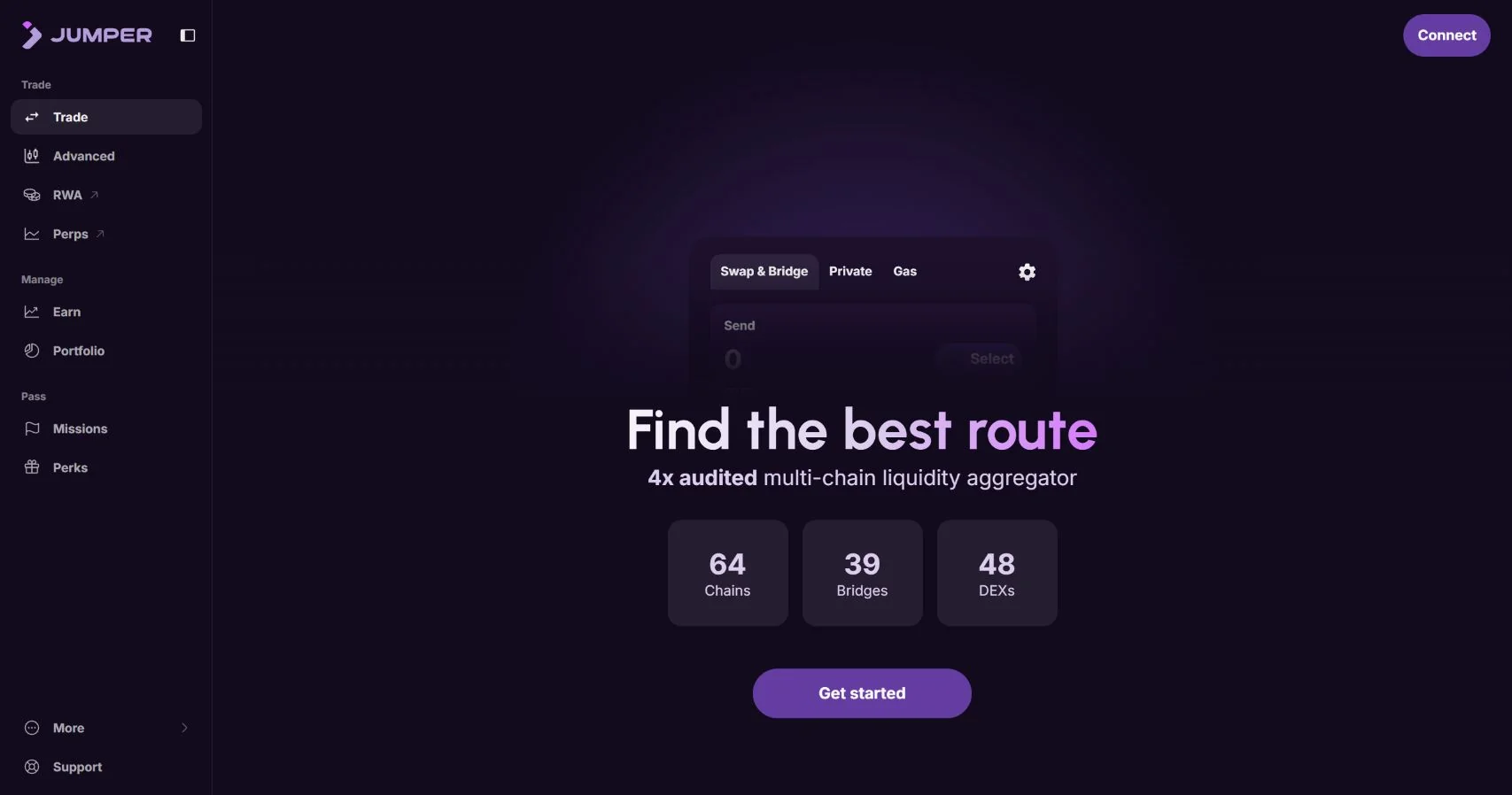
LI.FI / Jumper
The route coordinates bridges and swaps; it does not erase the risks of those underlying steps.
A cross-chain routing layer and its consumer-facing route interface.
BRIDGES & SWAPS
Cross-chain services combine bridges and swaps. Follow the source asset, each intermediate step and the exact token delivered.
Moving a token to another chain and exchanging one token for another are separate operations. A route may perform both. Routers coordinate multiple protocols, so an inexpensive first transaction does not establish an inexpensive complete journey.
FIND AN ALTERNATIVE
Short reviews. Product-level facts. A closer look at the trade-offs.
Choose a product that supports your task and settlement network. Network coverage is the researched subset; deposit routes can differ.
1 short reviews
Open platform comparisonThe route coordinates bridges and swaps; it does not erase the risks of those underlying steps.
A cross-chain routing layer and its consumer-facing route interface.
Broaden the network or task. A missing result does not establish that a platform has no such product.
A destination token can be native, bridged or wrapped, with different contracts and redemption assumptions. Confirm the destination contract and keep usable gas on the receiving chain when the route does not supply it.
Model the applicable costs →