DEX Aggregators

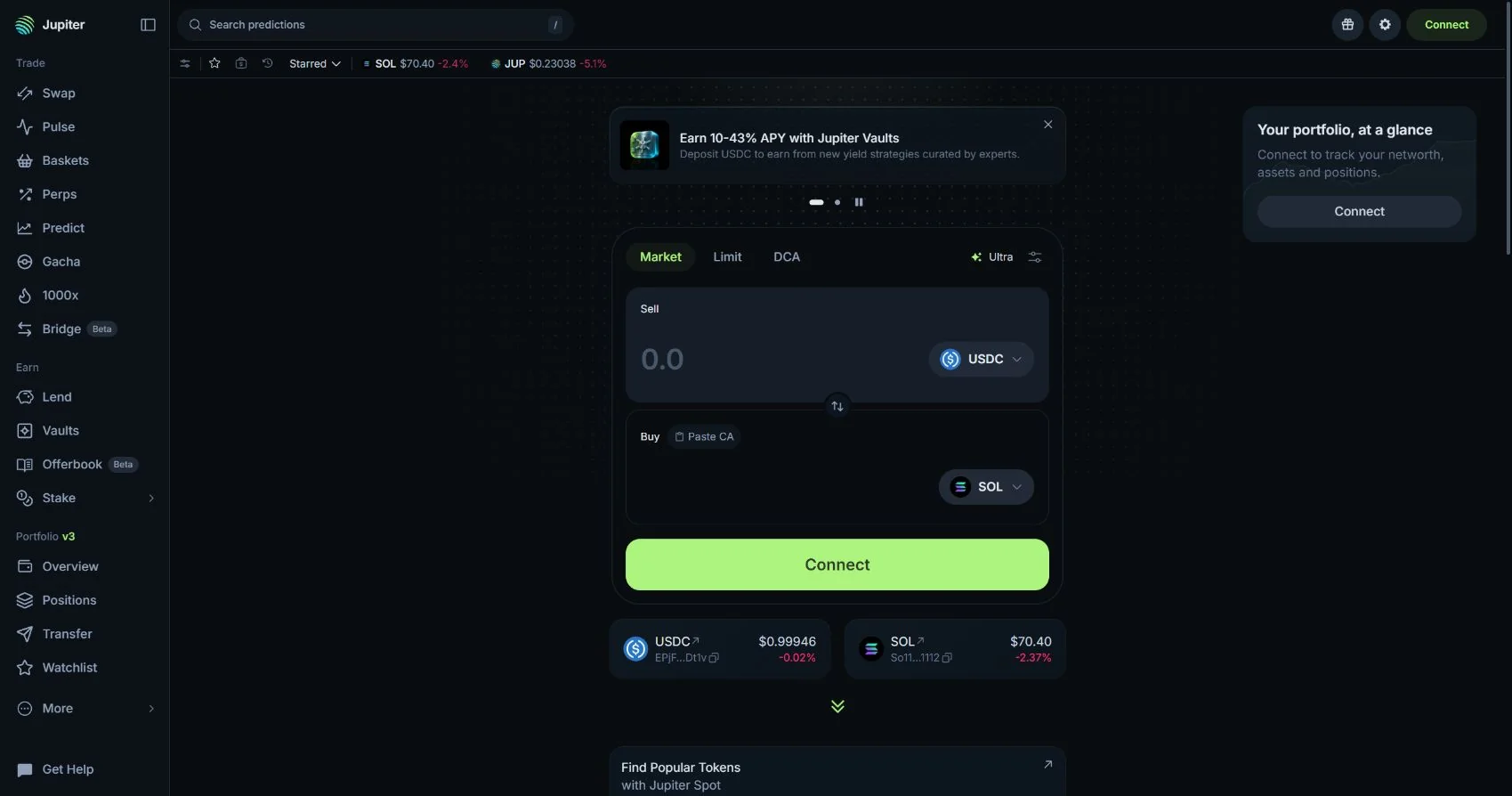
Jupiter
Compare the route and execution service, rather than treating every Jupiter flow as the same swap.
Solana swap routing with managed and custom execution paths.
ROUTES & INTENTS
Aggregators and solver systems search for execution routes. These reviews explain where the quote comes from and what the user signs.
Routing can split a trade across pools or invite market makers and solvers to compete. An aggregator may use a DEX that also has its own interface. A gasless route can still include service and execution costs.
FIND AN ALTERNATIVE
Short reviews. Product-level facts. A closer look at the trade-offs.
Choose a product that supports your task and settlement network. Network coverage is the researched subset; deposit routes can differ.
3 short reviews
Open platform comparisonCompare the route and execution service, rather than treating every Jupiter flow as the same swap.
Solana swap routing with managed and custom execution paths.
Classic routing and resolver-filled intents allocate gas and execution differently.
DEX routing and intent-based swap execution across documented networks.
Compare the settlement conditions and net output, not a promise that every trade is free of MEV.
Signed swap intents executed through solver competition and batch auctions.
Broaden the network or task. A missing result does not establish that a platform has no such product.
Compare the amount delivered after applicable costs, using the same assets, chain and trade size at the same time. Route coverage is finite; a quote does not prove that every possible source of liquidity was checked.
Model the applicable costs →